The School of the Soul: Why Your Mind Sends You Back to the Classroom
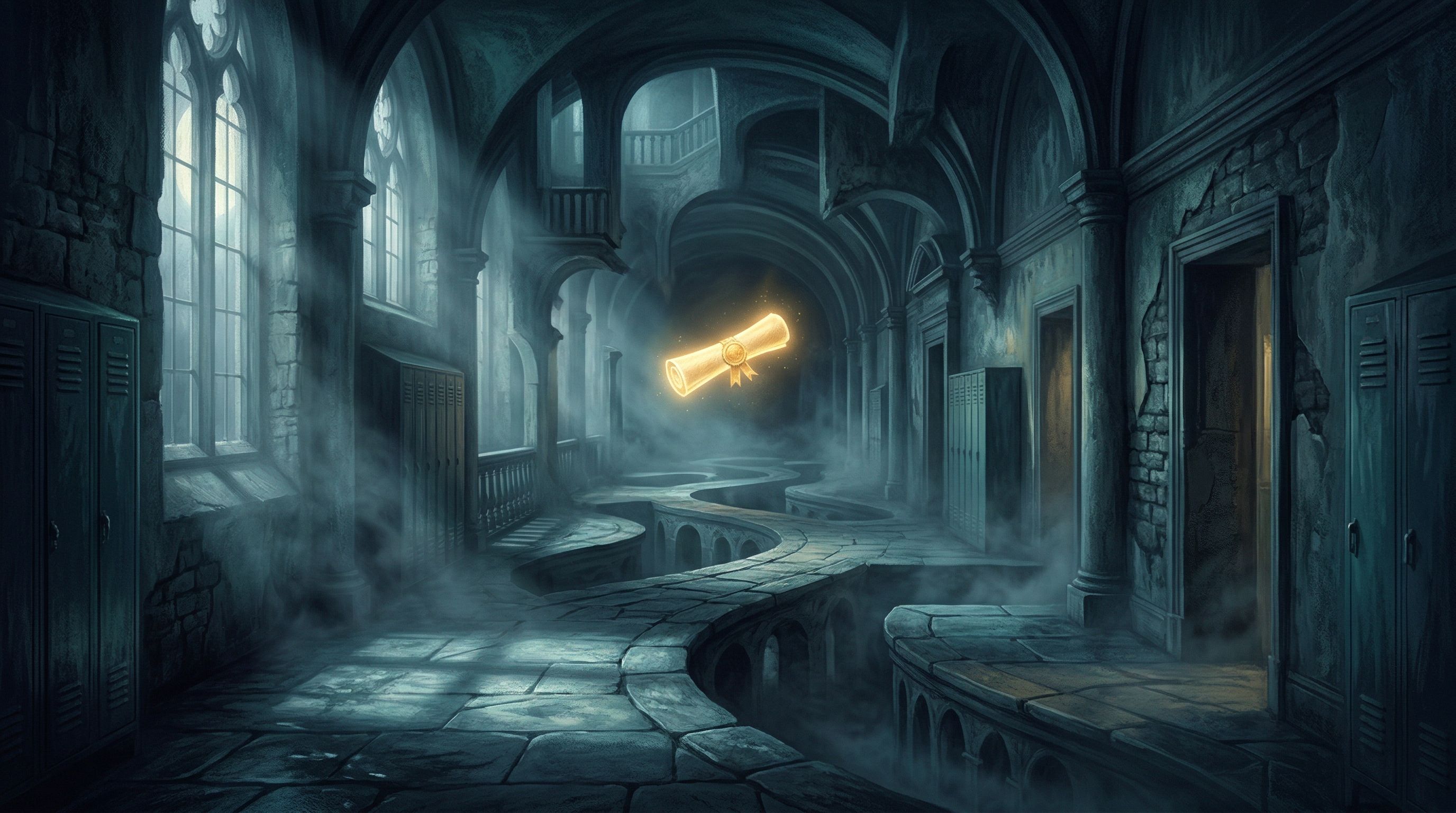
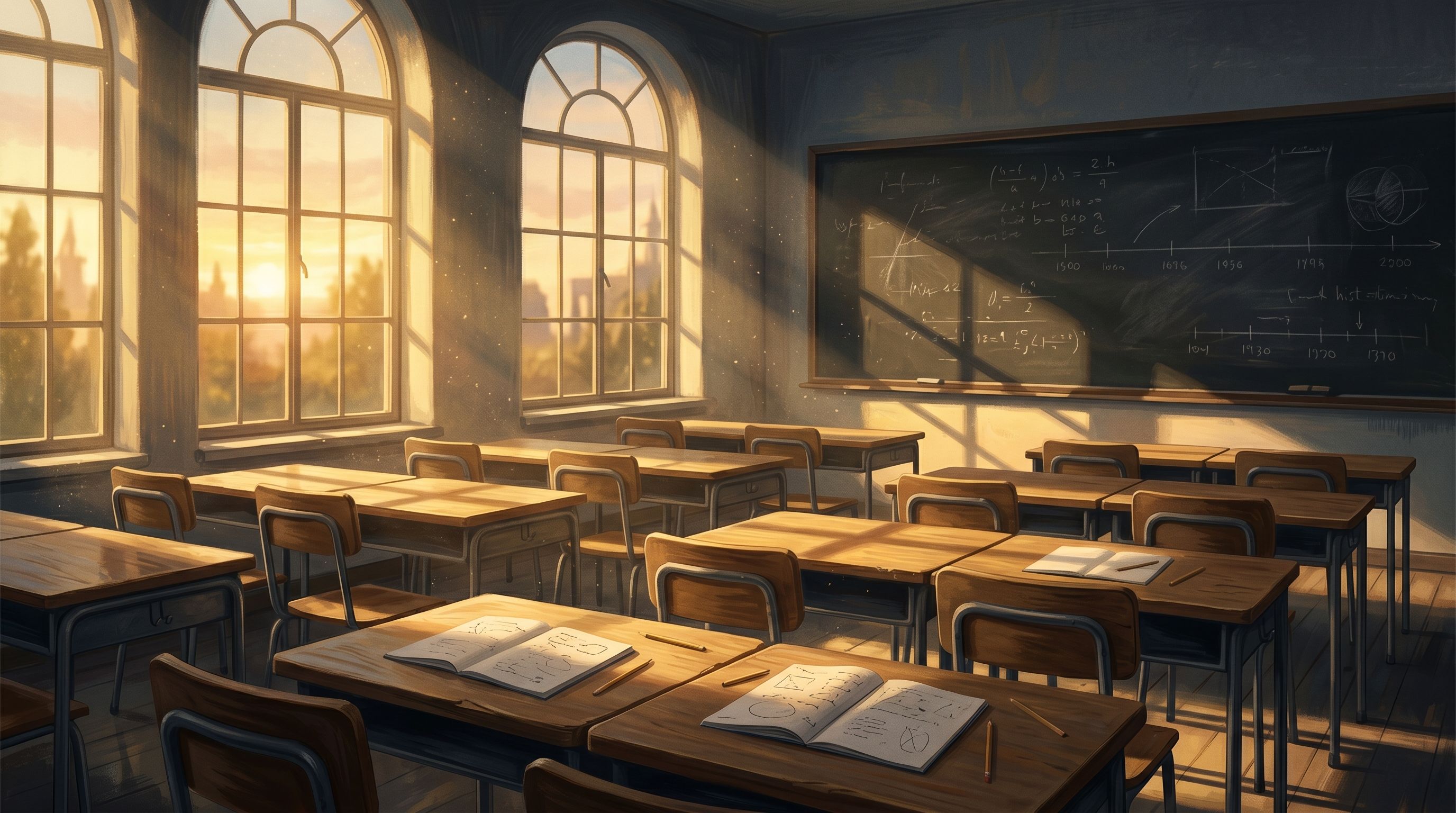
I see so many of these dreams in my nightly wanderings. You might find yourself in short trousers standing before a blackboard, or perhaps you are desperately searching for a classroom you can't find. This symbol touches the very essence of what it means to be human: your capacity for change.
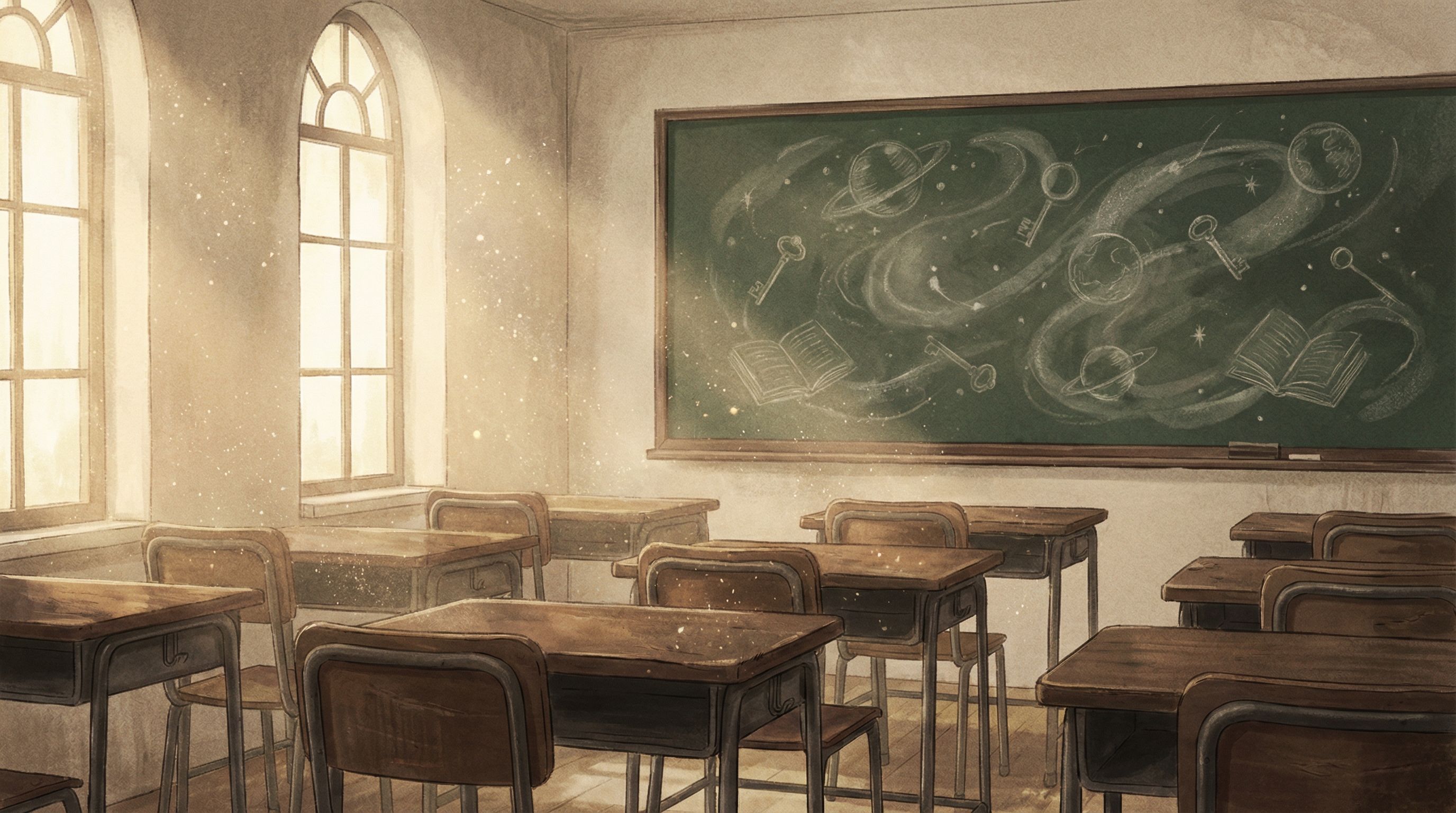
To dream of a student is often to come face-to-face with the archetype of the "beginning." In the world of dreams, a school isn't just a building; it is the laboratory of your future self.
If you see yourself as a student, ask yourself: in what area of your life are you currently a beginner? Perhaps you’ve started a new relationship, a new professional project, or even a new way of thinking. Your unconscious uses the imagery of youth and learning to tell you that it’s okay to stumble.
🌙 The Echo of Yume: Knowledge is not a destination, but a dirt path that we walk barefoot, accepting each pebble as a necessary lesson.
Some specialists in dream psychology suggest that these visions aren't about your past academic record. Instead, they reflect your current relationship with authority and your own inner critic. Sometimes, the pressure of a dream exam feels like standing on the edge of a steep cliff, where the fear of falling is actually a fear of failing your own expectations.
---
The Faces of the Student: A Mirror to Your Inner Needs
There are times when the student in your dream isn’t you, but a stranger—a child or a teenager you are observing. I remember a dreamer who constantly saw a quiet little boy sitting at the back of an empty classroom. He wasn't her son; he was her own curiosity, which she had locked away to meet the demands of the adult world.
Observing a studious student can reflect a part of you that hungers for structure. Conversely, a rowdy student might signal that you feel stifled by rigid rules. Your unconscious uses these figures to play out your relationship with how knowledge is shared.
These moments of clarity in a dream can be as rare and striking as an eclipse, momentarily darkening your certainties to reveal a deeper truth about your potential.
A Concrete Example: The Inverted Classroom
Consider the case of a woman who dreamt she was a student in a class where the teacher was a toddler. Initially, she felt frustrated and humiliated. However, as she sat at her small desk, she realized the toddler wasn't teaching math, but how to play.
This "use case" of the unconscious shows that the dream wasn't about a lack of knowledge, but a lack of joy. Her mind was forcing her to become a student of "playfulness" because she had become too rigid in her professional life. By accepting the role of the student, she finally allowed herself to learn the lesson she actually needed.
---
Befriending the Little Schoolchild Within
If this dream returns to you, please do not view it as a regression. You do not return to childhood because you have failed at being an adult; you return there to retrieve the tools you left behind: the capacity for wonder and the right to make mistakes.
My advice, as a devourer of nightmares, is not to look for the "right answer" as if you were taking a real test. The next time you wake up with that feeling of having been back at a school desk, simply ask yourself: "What lesson is life trying to teach me right now, and am I ready to listen?"
Sometimes, the lesson is simply to learn to love yourself despite your shortcomings. Dreams are patient teachers. They will repeat the lesson as many times as necessary, with infinite gentleness, until you agree to open your notebook.
Do not fear the blank page. It is not an empty void; it is a space where everything has yet to be written. If you want to explore these lessons more deeply, your Baku is always here to help you translate the whispers of your nights.
Sleep in peace, little apprentice of the dream world.
How many times have you woken up with your neck aching, still feeling the cramped wooden curve of a school desk that your adult body has long outgrown? It is a peculiar, almost physical discomfort that the dream world loves to inflict. You are forty, perhaps fifty, yet your knees are pressed against the underside of a miniature table, your fingers stained with blue ink that smells faintly of vinegar. I often marvel at how our minds use this physical constriction to mirror the narrow corridors we force ourselves into during major life transitions. When you are contemplating a mid-life career shift or facing the quiet panic of aging, your subconscious doesn't just show you a crossroads. It physically shrinks your environment, forcing you to feel the squeeze of your own self-imposed limitations before you can finally break free.
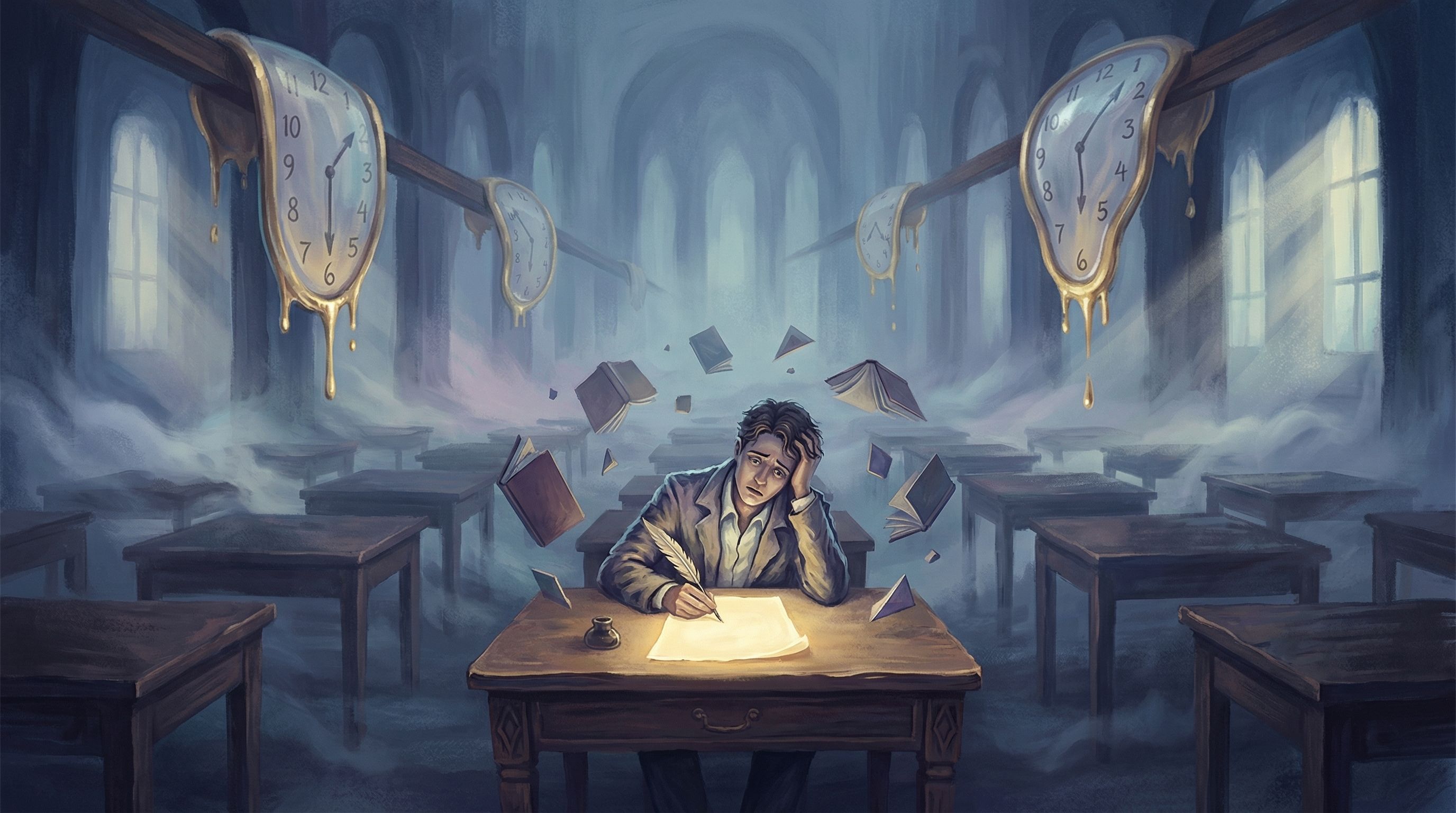
I once listened to a dreamer who was utterly distraught because she kept dreaming of arriving at a final exam completely naked, with no memory of the syllabus. She had consulted several books that told her she was fundamentally unprepared for her life. Honestly? It tires me to see such simplistic, anxiety-inducing interpretations. When we looked closer at her dream, the exam papers were entirely blank; there were no questions written on them. Her dream wasn't a warning of inadequacy, but a beautiful, messy invitation to embrace dreaming of failure as a form of liberation. The blank page wasn't a test she had forgotten to study for; it was a canvas she had not yet dared to write upon. Sometimes, the terrifying "F" grade is the only key that can unlock the cage of your perfectionism.
There is an old Zen concept of Shoshin—the beginner's mind—which views the ultimate state of spiritual awareness not as the accumulation of heavy dogmas, but as a return to complete emptiness. In Western education, we are taught that to be a student is to be incomplete, a vessel waiting to be filled with the weight of society's expectations. But the dream-state operates on a much older, almost Taoist frequency. When your night-mind casts you as a student, it is not pointing out your ignorance. It is gently stripping away your armor, returning you to the state of the uncarved block. The classroom of your sleep is a sacred space where you are allowed to know absolutely nothing, shedding the exhausting mask of the "expert" so your soul can breathe again.
Sometimes the dreaming mind plays a fascinating trick: you are the student sweating over the exam, but you are also the silent observer standing at the back of the classroom, watching your own panic with a strange, cool detachment. It is a haunting sensation, akin to looking down at your own path from the quiet peak of a lonely hill. This psychological split isn't a sign of dissociation; rather, it is your consciousness practicing the art of the "Observing Self." Your dreaming mind is showing you that while one part of you is deeply entangled in the daily drama of learning and struggling, another older, wiser part of you remains completely untouched by the grade. You are both the struggling apprentice and the eternal master who already knows how the story ends.