When the Mirror Refuses to See You: A Loss of Identity?
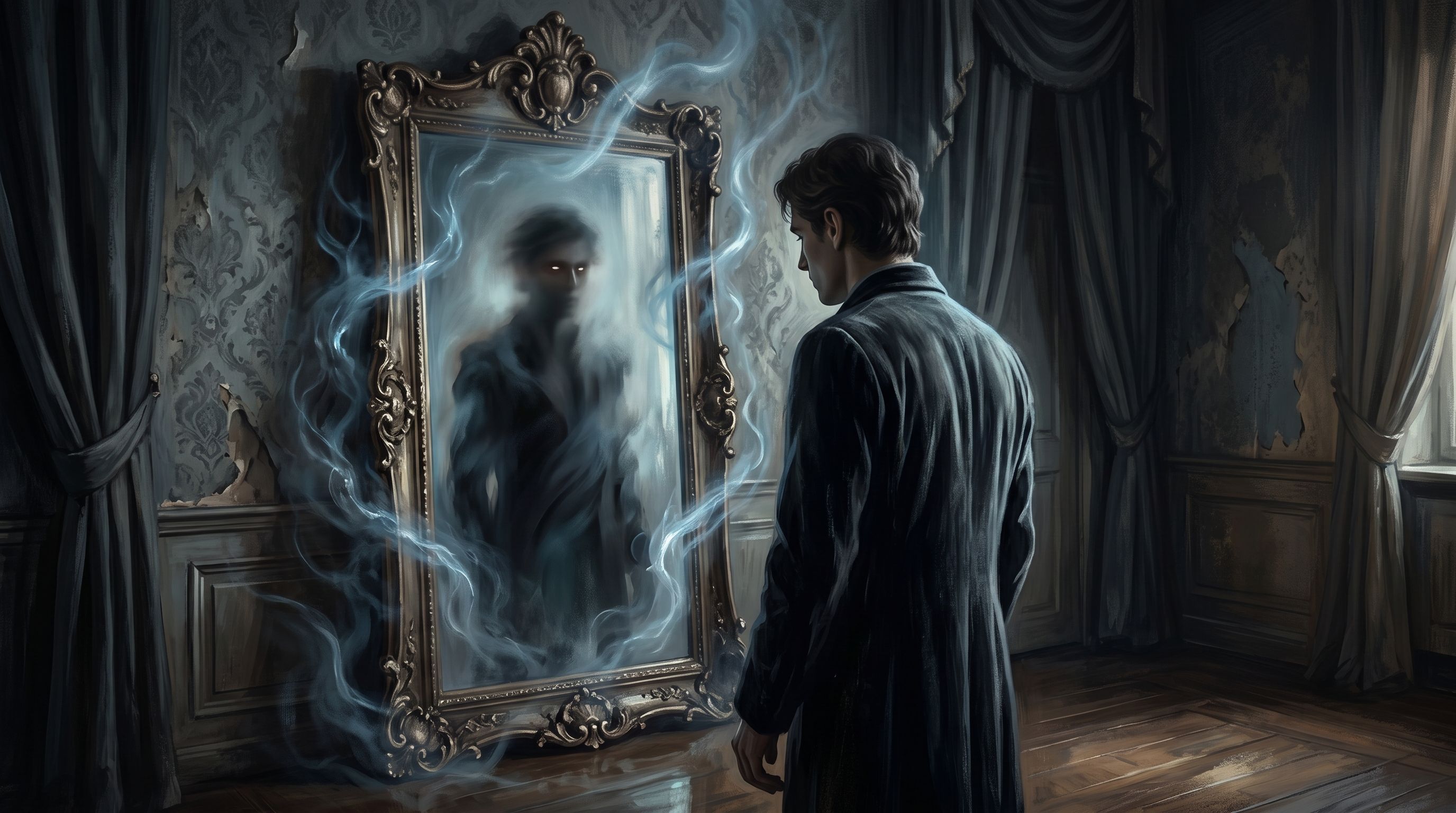
I have a little secret to share with you: I’ve always found mirrors fascinating, yet a bit fickle. In the world of dreams, they are not mere objects of glass and silver; they are bridges to self-awareness. When you face an absent reflection, your subconscious isn't telling you that you no longer exist. It’s telling you that the image you have of yourself no longer matches your inner reality.
This is often called a loss of identity, but that term feels a bit harsh, don't you think? It sounds as if you’ve simply misplaced your keys. I prefer to see it as a shedding of skin. Like a snake leaving its old self behind, your spirit is casting off an image that has become too tight, too small.
Sometimes, we cling so hard to who we should be—the perfect parent, the devoted employee, the friend who is always there—that we eventually forget who we actually are behind the mask. You might even dream of changing your physical appearance, like growing a beard, as your mind experiments with different versions of "you." The void in the mirror is the space necessary for the truth to finally emerge.
From a psychological perspective, some specialists in dream phenomenology suggest that mirrors represent our "social self"—the part of us we present to the world. When the reflection disappears, it may indicate a temporary disconnection from that social persona. It is not a clinical diagnosis, but rather a sign that your mind is prioritizing your internal world over your external reputation.
---
The Fertile Void and the Silence of the Soul
In our societies that overvalue image, emptiness is frightening. We fill everything: our schedules, our screens, our minds. Yet, in the world I inhabit, the void is the womb of everything yet to be born. Dreaming of a mirror that reflects nothing is a way of giving yourself a break, a necessary "reset" of the ego.
Are you going through a period where you feel you no longer have a shimmer of control over time? This absent reflection can symbolize a need for total disconnection. If you cannot see yourself, no one can judge you. You are free. It is as if you have stepped outside of the reach of a curse or a social obligation that has been weighing on your shoulders.
There is a very strong spiritual dimension to this symbol. To have no reflection is also to have no shadow, to have no weight. It is a poetic metaphor for absolute freedom. Could you be unconsciously trying to escape a situation that feels too heavy? Sometimes, the mind chooses to become "nothing" so it no longer has to suffer from what is imposed upon it.
🌙 The echo of Yume : To be invisible is not to be absent; it is to be everywhere at once, unburdened by the limits of a single face.
However, I must be honest with you: this emptiness can also reflect deep emotional exhaustion. If you give everything to others, if you scatter yourself across a thousand projects, there is nothing left of "you" for the mirror to catch. Your energy is elsewhere, dispersed, and the dream gently reminds you that it is time to bring some of that light back to your own center.
---
The Neuroscience of the Invisible Self
While we often look for mystical meanings, your brain also has its own logic. During REM sleep, the brain’s body schema—the internal map that tells you where your limbs are and what you look like—can become fluid. Some researchers in the field of sleep science estimate that the "self-representation" centers in the prefrontal cortex are less active during dreaming, which can lead to these strange "glitches" in the mirror.
It is not that you are disappearing; it is simply that your brain is busy processing emotions and memories, and it has "forgotten" to render your physical form. This is particularly common during periods of high stress or sensory overload. When your waking life is too loud, your dreams might opt for a "Dark Mode" aesthetic, stripping away visuals to focus on pure feeling.
I often wonder if humans realize how protective their subconscious truly is. This dream is not a threat of disappearance; it is a veil of privacy that your mind throws over you to allow you to rest from the gaze of the world. It is an invitation to close your eyes to your outer image so you may finally open the eyes of your intuition.
A Concrete Example: The Transparent Professional
I met a dreamer a few moons ago who was terrified by this emptiness. He felt transparent at work, as if his ideas passed right through people without touching them. In his dream, he stood before a grand, gilded mirror in an office, but saw only the empty chair behind him.
By exploring this together, we discovered that this void was actually an opportunity: the chance to no longer be defined by the expectations of his colleagues. Once he accepted that he didn't need to "see" himself through their approval, his reflection returned in his dreams—not as the tired businessman, but as a younger, more vibrant version of himself. He had used the void to rebuild.
---
Embracing the Blank Page of Your Identity
If you wake up with this strange sensation, do not try to immediately cling to your image in the bathroom mirror. Take a moment, stay in the silence of your sheets, and ask yourself: "If I had no face, if I had no name, what would be left of me?"
That is where your true strength lies. The messages of the night are compasses, not sentences. This absent reflection is perhaps the most beautiful gift your mind can give you: a blank page upon which you are finally free to write who you truly want to be.
You are not lost; you are simply in the process of being found. If you want to explore these shadows and reflections more deeply, your Baku is always here to listen and guide you through the mist.
If you want to explore your dreams more in depth, your Baku is waiting for you.
I once met a dreamer who woke up in tears because her dream mirror was cold to the touch and showed nothing but a deep, quiet silver fog. She felt erased. But in my world, mirrors are sacred hearths—they do not just mimic your physical body, they reflect the weight of the soul. When the glass goes quiet, it doesn't mean you are lost; it means your spirit is resting, momentarily untethered from the heavy demands of having a name, a job, or a face to maintain. Honestly, it irritates me when modern guides label this as a clinical dissociation or a sign of depression. Why must we always pathologize silence? Sometimes, your soul is simply taking a quiet walk in the mist, leaving the mirror clean, cool, and beautifully undisturbed. It is a sanctuary, not a symptom.
Have you ever stood at the edge of a major life transition, feeling completely stripped of your old certainties? This blank glass often visits those who are about to reinvent their lives from scratch. It is a sensation highly similar to opening a book with blank pages—that breathless, slightly terrifying moment before the first stroke of the pen. You cannot paint a new portrait of yourself if the canvas is still crowded with the ghost of who you used to be. The mirror must be cleared of its old reflections first. I suggest you do not rush to find a new identity or force yourself to fit into a new box. Lean into this clean slate. Let yourself be nothing but pure potential for a little while; your true face will return to the glass when you are ready to wear it.