A Guide Who Whispers Through the Ages
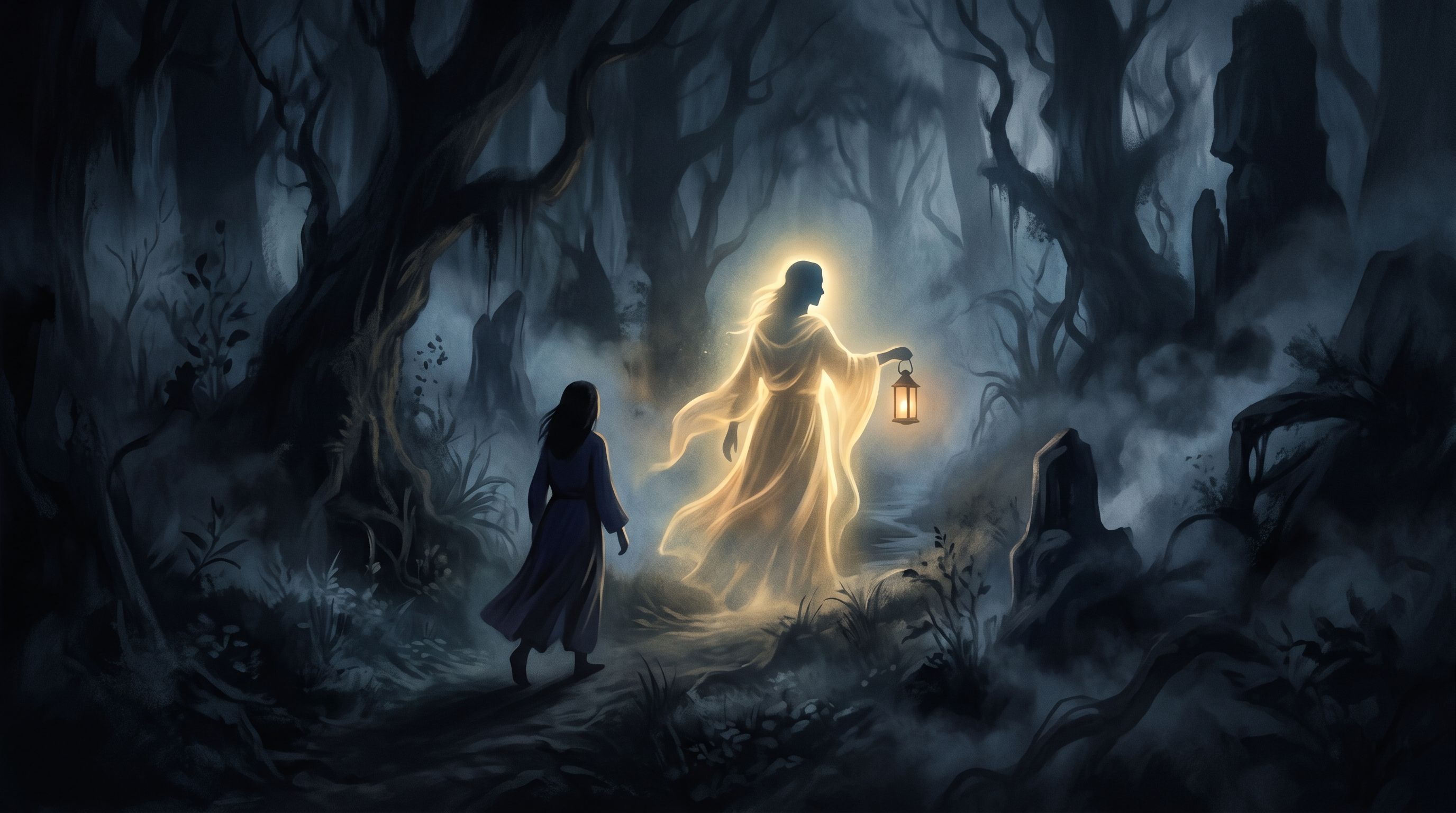
I must share a secret with you: I have a certain distaste for traditional dream dictionaries that coldly claim an old man "announces an inheritance" or "predicts an illness." It is such a heartbreakingly hollow way to look at the architecture of your soul. In the tapestry of your nights, the old man is far more than a simple omen; he is a resonance. He is that hidden sage living in the deep folds of your mind, in a place where linear time no longer holds sway.
When you encounter him, I want you to ask yourself: what was held in his gaze? Often, the message doesn't lie in his words—if he speaks at all—but in the profound emotion he radiates. I recently tasted the dream of a young woman who saw an old man sitting on a mossy bench, saying nothing, but holding a broken compass. She woke up terrified, feeling lost.
Yet, the message was one of infinite gentleness. It suggested that she didn't need a mechanical instrument to know where she was going; her instinct was already enough to guide her through her current blooming into a new phase of life. Sometimes, this figure resembles a shepherd guiding his flock—not to command you, but to ensure you don't lose your way in the mists of your own hesitations.
🌙 The echo of Yume : Silence is the language of the stars; when a dream figure says nothing, it is because your soul is already listening.
---
The Many Faces of Ancient Wisdom
There isn't just one type of old man in the world of dreams. Your unconscious is a master of theater, and it loves to change costumes to better surprise you. To understand what your mind is trying to tell you, you must look closely at the "mask" the figure wears.
First, there is the benevolent elder, the one who offers you an object, a key, or simply a knowing smile. In the perspective of analytical psychology, this is often seen as the "Senex" archetype—the personification of order, wisdom, and the passage of time. He embodies your own blossoming maturity. This is a sign that you are ready to integrate a truth you have been running from. If you meet him in a library or a temple, it highlights your thirst for spiritual knowledge and a sense of reaching out toward a higher understanding of your purpose.
But be careful—I also occasionally come across dreams where the old man is stern, or even frightening. Do not misunderstand; he isn't there to harm you. He is often the shadow of your own self-criticism or the image of a tradition that is stifling your growth. If he pursues you, perhaps you are fleeing a responsibility or an ancient truth that you haven't yet had the courage to face.
Is he a guide trying to catch up to keep you from falling, or is he the weight of the past dragging you down? The nuance is subtle, and it is up to you to feel the weight of his presence. This symbol evolves as you do. A dreamer might see the same old man twenty years apart: the first time, he is a reassuring grandfather; the second, he is a beggar who holds the secret of the universe.
---
Why Does Your Brain Choose This Image?
From a more grounded perspective, some specialists in sleep science suggest that these "archetypal" dreams occur during particularly deep REM cycles. When your brain is processing complex emotional dilemmas, it often reaches for universal symbols to simplify the narrative. The "Old Man" is a shortcut for "Experience."
When you are facing a choice that requires more than just logic, your brain may activate the circuits associated with long-term memory and social hierarchy. By personifying "Wisdom" as an elder, your mind creates a dialogue between your current, stressed self and your potential, calm future self. It is a form of internal consultation.
If your mysterious old man doesn't speak, don't try to force a dialogue. In the dream world, silence is a form of pure presence. This silence reflects your own capacity for inner listening. In our noisy modern world, the unconscious must sometimes create a figure of ancestral authority to force us to be still and observe.
Look at his hands: are they calloused? Do they bear scars? These details tell the story of experience, the work of the soul. If you feel lost in your waking life, this figure is there to anchor your feet to the ground. He is the root when you are but a leaf tossed by the wind.
---
Concrete Example: The Architect of the Cave
Consider the case of a man in his early thirties who was struggling with a high-pressure career change. He dreamed repeatedly of an old man standing at the entrance of a dark cave. Every time the dreamer tried to ask for directions, the old man would simply point to a small, flickering candle on the ground.
Initially, the dreamer felt frustrated, wanting a map or a clear instruction. However, after reflecting on the dream, he realized the "Old Man" (his own inner wisdom) was telling him that he didn't need to see the whole path—only the next step. The "cave" was his future, and the "candle" was his daily effort. Once he accepted this, the recurring dream stopped, and his anxiety about the career move significantly decreased.
---
How to Honor the Encounter
If you have recently met this figure, I suggest you don't rush to find a "solution." Instead, try to sit with the feeling he left behind. The wisest characters are often the most patient.
Never forget that these characters are projections of your own inner richness. They are not external to you. They are you, perhaps with a few centuries of extra experience added to your spirit. They remind you that even in your moments of greatest doubt, there is a part of you that remains unshaken, watching over the rest with the patience of a mountain.
🌙 The Echo of Yume : You are the book, the reader, and the wise librarian all at once.
Take care of your nights. They are far wiser than your days, and they hold the keys to doors you haven't even noticed yet. If you want to explore your dreams more deeply, your Baku is waiting for you.
— Yume
Have you noticed how these dreams often carry a peculiar sensory weight? I am always struck by how dreamers describe the atmosphere surrounding this old man—the smell of old cedarwood, the sudden cooling of the air, or the sound of dry leaves scraping against stone. In Eastern traditions, particularly Taoist lore, the ancient hermit doesn't arrive to hand you a map or demand a heroic quest. He represents wu wei, the art of effortless action. He is the old man sitting by a misty river who does nothing, yet leaves nothing undone. If he appears to you when you are frantically trying to force a decision, his mere presence is a plea to stop striving. Honestly, this quiet stillness is what we so desperately lack in our waking hours, and your sleeping mind knows it.
I once met a dreamer, a painter exhausted by a long creative drought, who wept because she felt her talent had died. In her dream, she met an old man sweeping the floor of an empty, dust-filled theater. He didn't offer her a brilliant spark of inspiration; he merely handed her a broom and smiled. Sometimes, the mysterious elder is less of an intellectual oracle and more of a restorative companion, similar to what you experience when dreaming of a guide who offers no grand directions, only a shared silence. If you are currently facing burnout, he might appear not to push you forward, but to remind you that even the soil needs to lie fallow. He is the guardian of your patience, showing you that wisdom cannot be rushed.