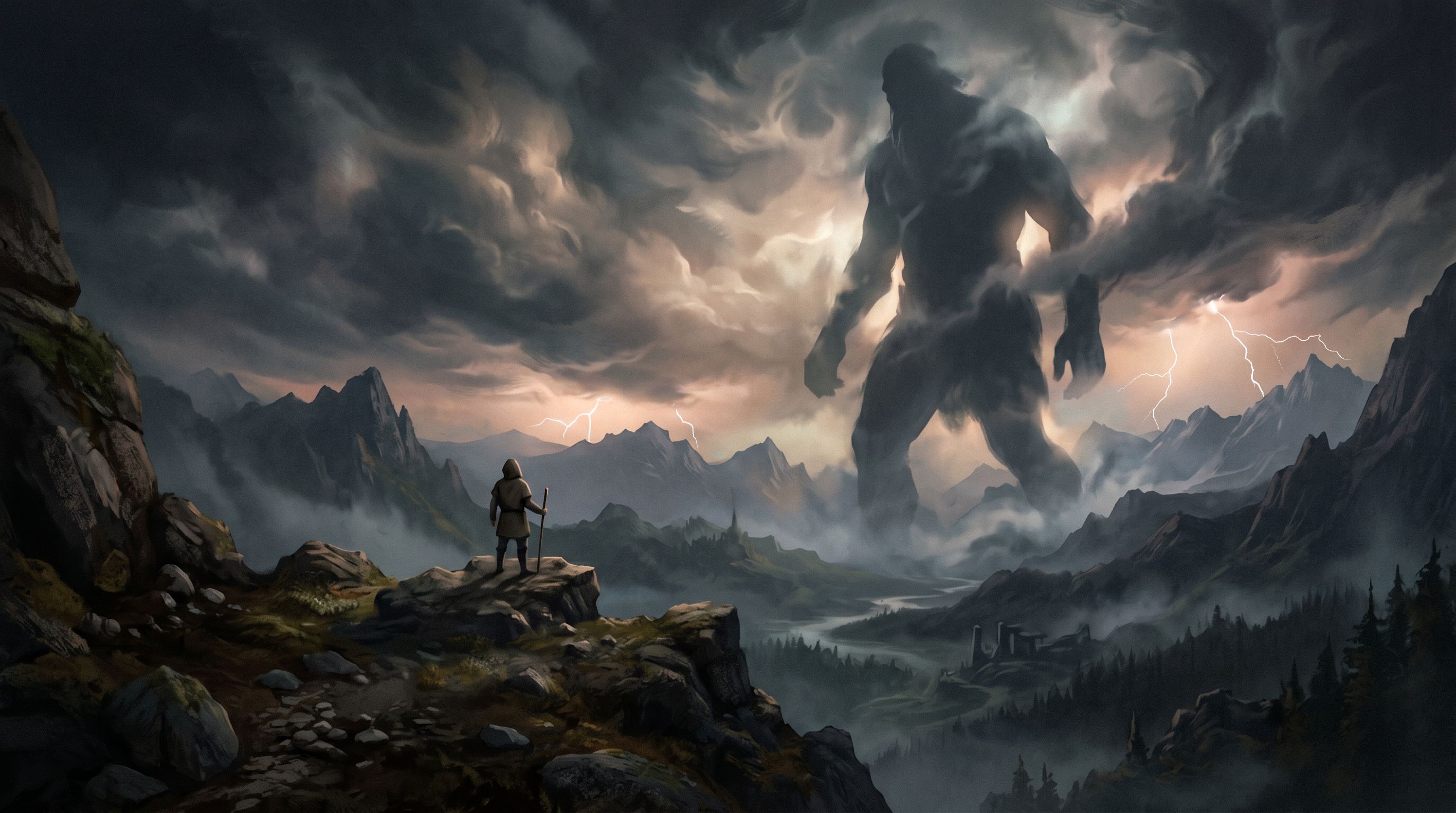
When stone becomes flesh: The awakening of the inert
Honestly, I find it fascinating how much we, as living beings, love to freeze things. We create habits, certainties, and "statues" of principles that we believe to be eternal. Then, one night, a dream interveners to shake it all up. Seeing a statue move in your sleep is like witnessing the collapse of a facade.
A little while ago, a dreamer confided in me that she saw a statue of her grandfather—who was usually stern in her memories—begin to dance. She was terrified. But as we spoke, we realized it wasn’t her grandfather who frightened her; it was the idea that her own moral rigidity might soften. Sometimes, we prefer things to remain dead and predictable rather than alive and uncontrollable.
This dream often occurs when you are on the threshold of a great inner change. It’s a bit like deciding to unearth a forgotten treasure in the garden of your childhood: you don’t know if what you find will be intact or transformed by time. The animating statue is your psychic energy reclaiming its rights over the rigidity of daily life.
Why does this "frozen life" disturb us so much?
The fear we feel when a statue comes to life—what psychologists sometimes call the "uncanny valley"—comes from our need for control. A statue is supposed to stay in its place. It is a symbol of the definitive. When it starts to walk, it breaks the contract of reality.
But look closer: is the statue actually threatening? Or is it simply... there? Often, the unease comes from the fact that we project our own fears onto the unknown. If you view this movement as a revelation, everything changes. It is your subconscious whispering to you that nothing is ever truly set in stone. Your fears, your traumas, your past failures... they are not indestructible blocks of marble. They can move, stretch, and eventually walk away.
I’ve noticed that this type of dream frequently appears to those who feel they are stagnating. You might feel like a statue in your own life, watching the world pass by without participating. The dream comes to break that inertia. It shows you that movement is possible, even where you thought everything was petrified. It’s a bit like rediscovering the motion of a swing after years of immobility: at first, it makes you dizzy, but oh, what a feeling of freedom!
The symbolism of revelation through movement
We must also ask ourselves which statue started to move. Is it a divinity? A historical figure? An abstract shape?
- A religious or sacred statue: This often points toward a spiritual awakening or a questioning of your deepest values. It might be a moment where you experience a sense of enlightenment, where an ancient truth takes on a new, dynamic meaning in your current life.
- A statue in your own likeness: This is a direct call for authenticity. Perhaps you have been playing a role for too long, "statue-ifying" yourself to please others or to protect yourself. The dream is telling you it’s time to become a being of flesh, emotions, and mistakes again.
- A famous statue: This often represents social pressure or an ideal of success that feels unreachable. By seeing it move, your mind de-dramatizes it: even the "ideal" is subject to change.
I’m not a big fan of dream dictionaries that say "moving statue = betrayal by a friend." That’s so reductive! For me, as a Baku who savors these images, it is primarily a story of fluidity. Your mind is "thawing" a part of your history. It is a beautiful process, even if it feels overwhelming at times.
My humble Baku advice
Do not fear the statue that comes to life. It is not a stone monster come to haunt you, but a part of yourself claiming oxygen. If you have this dream, it is likely because you are ready to set aside the overly rigid structures of your life to embrace a little more spontaneity.
In the morning, when you wake up, ask yourself this question: "What in my life right now deserves to be a little less fixed?" Perhaps a relationship, an opinion of yourself, or a habit that no longer serves you. Let the stone turn back into breath. Life is a current, not a museum.
Listen closely to the texture of this dream. Was there a sound? Often, dreamers tell me about a grating, dry shriek—the terrible friction of stone grinding against stone. It is a heavy, dusty noise that vibrates in your teeth. But then, a strange paradox occurs: despite the immense weight of the marble or bronze, the statue moves with a terrifying, impossible lightness. It is as if gravity itself has surrendered. Honestly, this contrast is what confuses your sleeping mind the most. It reminds me of the moment we finally decide to face a heavy, buried truth. The weight of keeping a secret locked away feels monumental, like a granite block, but once it starts to shift, it is like dreaming of a revealed secret—the initial friction is jarring, yes, but the relief that follows is lighter than air. Your mind is showing you that the heaviest burdens in your life only require a single, tiny tilt to lose their crushing power.
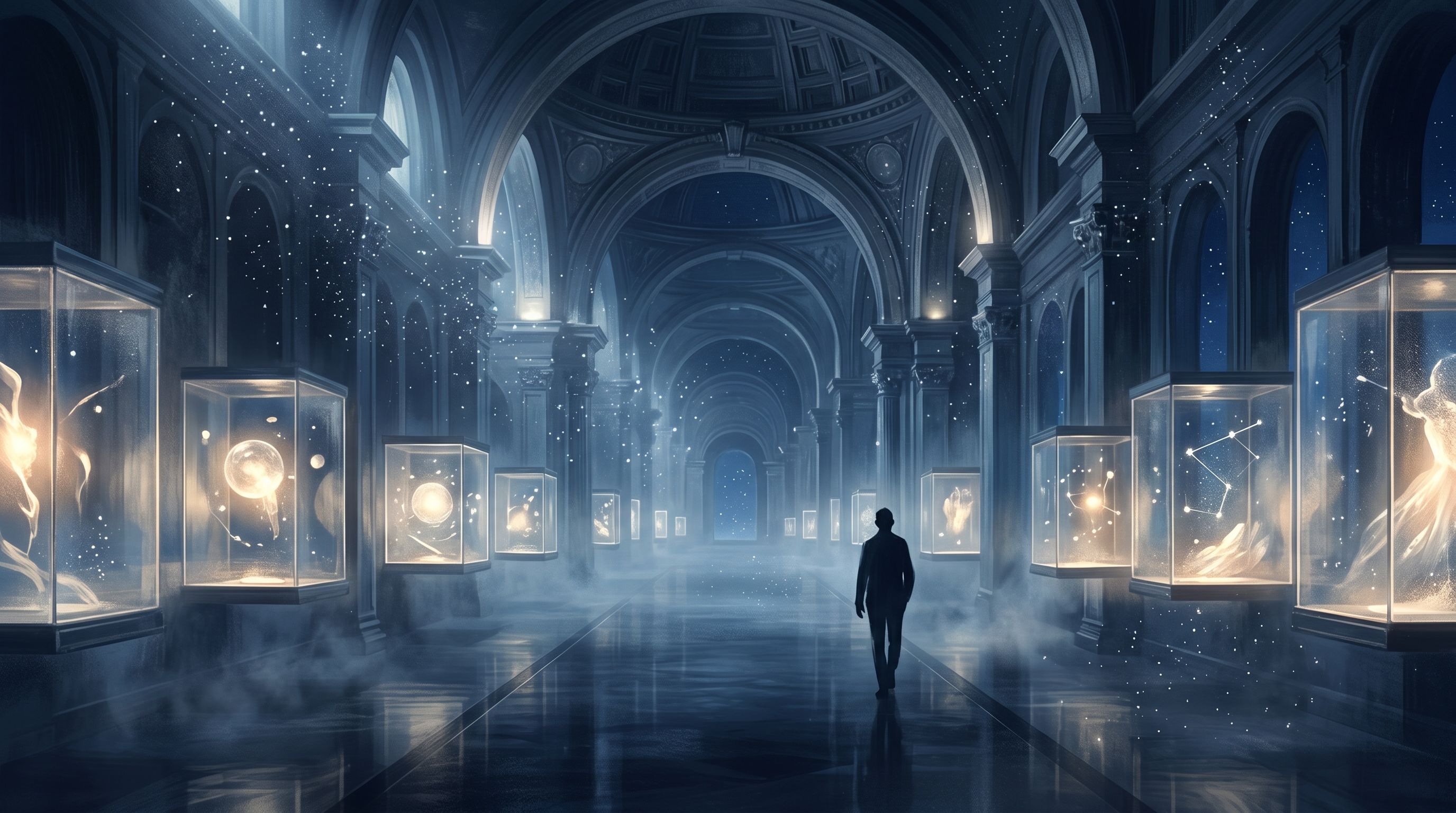
I must admit, it tires me when popular dream dictionaries slap a single, anxious label on this—calling it a warning of "loss of control" or "betrayal." What nonsense. For centuries, across different cultures, bringing stone to life was seen as a sacred, almost alchemical miracle. Think of Pygmalion kissing his ivory statue until it warmed into flesh, or the clay of the Golem receiving the breath of life. To breathe life into the inert is not a threat; it is the ultimate act of creation. If your unconscious is animating a statue, it is acting as an artist, not an executioner. It is taking the rigid, cold rules you have built to protect yourself and infusing them with soul. You aren't losing control; you are being invited to participate in a grand, creative awakening. Why keep yourself locked in a museum of perfect, dead memories when you could live in a messy, moving world?
I once met a dreamer who was haunted by a moving statue of her late mother, standing cold and pristine in a foggy plaza. In her waking life, she had canonized her mother, turning her memory into a flawless, untouchable monument. By doing so, she had accidentally frozen her own grief, refusing to let it evolve. When the statue in her dream finally stepped down from its pedestal and offered her a simple, clumsy hug, she woke up weeping. That is the secret magic of these mineral dreams: they force us to demystify what we have placed too high. Whether it is a lost parent, an ex-partner, or even a past version of yourself that you worship as "perfect," keeping them as stone prevents you from healing. It is a slow process, not unlike dreaming of digging something up from the deep earth—it is messy, it shakes your foundations, but it finally lets the dead be dead, and the living be beautifully, imperfectly alive.
If this symbol continues to haunt you, or if you want to keep a trace of this strange mineral encounter, don't hesitate to record it. In the Midnight Mind app, you can add this statue to your collection of symbols and see how it evolves through your nights; it’s an excellent way to transform your fears into a true inner work of art.