The mirror is not the truth, it is an interpreter
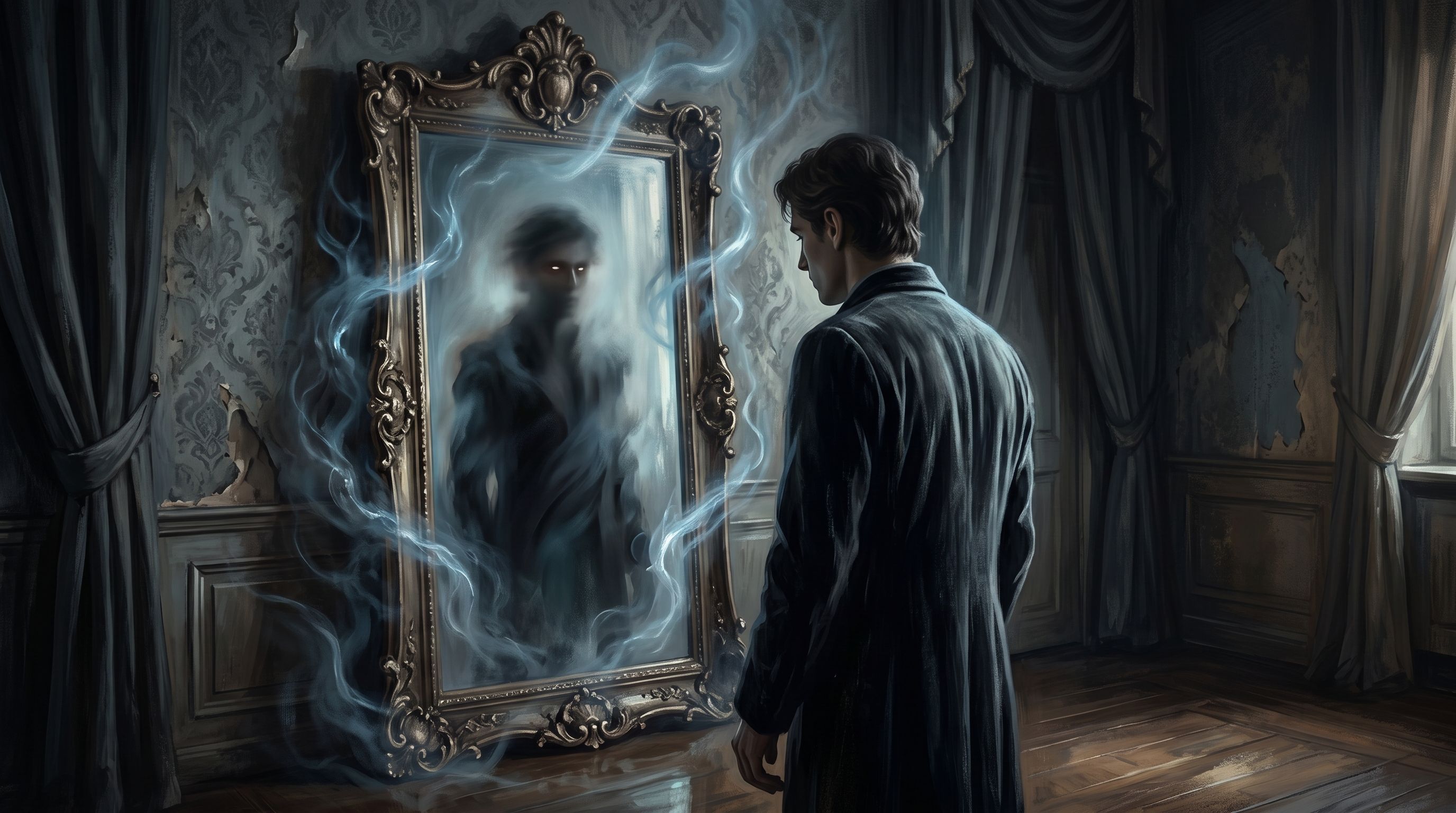
I often see dreamers panic before a monstrous or grotesque reflection. They wake up with a start, convinced their soul is as twisted as the image they saw. Honestly, this interpretation tires me a bit. The mirror, in the world of dreams, is not photographic proof of who you are. It is a sensitive surface, like the skin of a drum that vibrates according to the intensity of your emotions.
If you see a distortion, it is not "you" who is deformed, it is your perception. Imagine trying to look at yourself in water agitated by a storm: you wouldn't blame your face for the waves, would you? In a dream, the storm might be work stress, a family argument, or that persistent feeling of having to wear a mask to please others. Sometimes, we feel stuck in a box too narrow for our ambitions, and the mirror ends up reflecting this suffocation in the form of stretched limbs or compressed features.
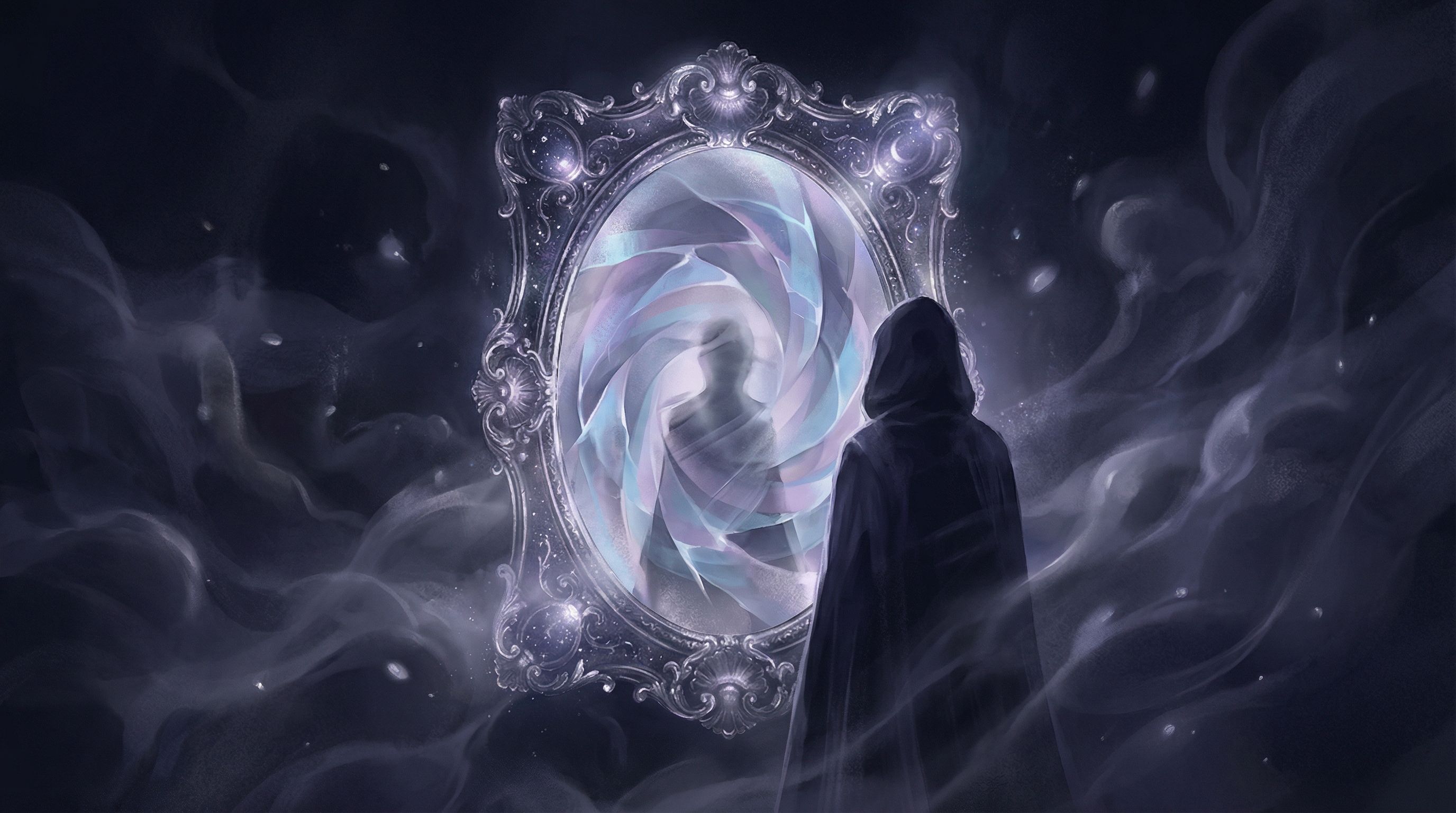
This symbol has fascinated me for centuries because it touches the root of consciousness. In my Baku wisdom, I see these mirrors as filters. If you find yourself too tall, too small, or unrecognizable, ask yourself: "Through whose eyes am I looking at myself right now?" Often, it is not through your own. It is through those of a demanding parent, a critical partner, or a society that demands perfection. The distorting mirror is there to tell you: "Look at how the gaze of others disfigures you. Is it time to turn away from it?"
The mechanics of the soul: when the reflection creaks
There is a very tactile dimension to this type of dream. Sometimes, the distortion seems almost mechanical, as if the gears of your identity were poorly oiled. We look for the flaw, we try to understand what is wrong with the machine. It's a bit like when you feel you need to adjust a screw in your own internal functioning so that everything becomes fluid again.
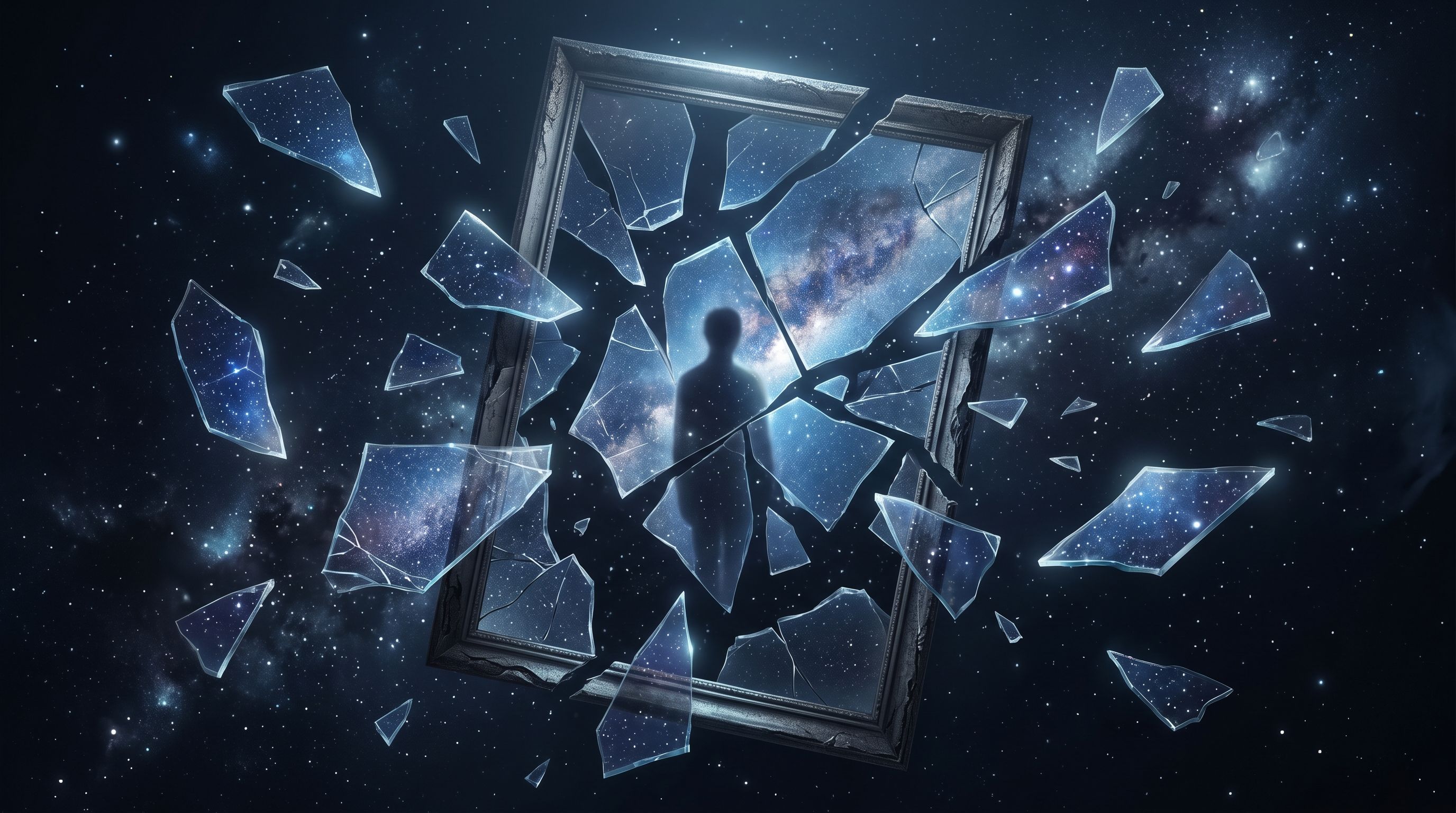
Honestly, I am not a fan of dream dictionaries that say: "Distorting mirror = bad luck." It's so simplistic. On the contrary, I think it's a moment of great opportunity. Distortion occurs when the rigid structure of your ego begins to crack. It's uncomfortable, yes, but it's through these cracks that the light of your true self begins to pass.
I met a dreamer once who saw his face melting like wax. He was terrified. But by discussing it with him (in the silence of his subconscious), he realized he was leaving a job he had hated for twenty years. His "dynamic executive" face was melting to make room for something else, something more human, less fixed. The distortion wasn't a threat; it was a liberation.
It also happens that the distorting mirror is linked to a feeling of helplessness. We try to fix our hair, to adjust ourselves, but the more we move, the more absurd the reflection becomes. It's a sign that you need to stop acting on the outside. If you don't like what you see in the mirror of your nights, don't change your face. Change the source of the light. Change the way you treat yourself when no one is watching.
Taming the reflection and finding clarity again
If you wake up with this feeling of unease, do not push the image away. Breathe. Dreams are not enemies; they are messengers that use metaphors that are sometimes a bit blunt to get your attention. The distorted mirror is a cry from your subconscious begging you to be gentler with yourself.
Here is a little Baku tip: the next time you feel lost in front of your own reflection, whether in a dream or in reality, close your eyes. Your essence does not depend on what a reflective surface—whether made of glass or the opinions of others—says about you. You are the consciousness that watches, not the image being watched.
Doubt is allowed; it is even healthy. I cannot give you ONE single exact meaning, because your mirror is unique. Is it curved? Is it colored? Does it make you laugh or cry? Each nuance tells a part of your story that only you can truly decipher. But know one thing: even in the strangest distortion, your spark remains intact. It is just waiting for you to stop relying on appearances to recognize yourself again.
Have you noticed how quiet these dreams usually are? There is rarely a soundtrack to a distorted mirror; the air feels thick, almost underwater. You might feel a strange pull in your muscles, a sensation of dreaming of changing shape as if your somatic boundaries were dissolving. This isn't just a visual trick. Your sleeping brain is processing the sheer fatigue of holding yourself together during the day. When you force yourself to maintain a rigid posture in your waking life—smiling when you want to scream, standing tall when you feel like collapsing—your dream self reacts by melting the architecture of your body. The warped glass simply plays witness to this deep, muscular release. Let the tension go.
In the old days, long before modern glass, we looked at ourselves in polished bronze mirrors. They were never perfectly flat. They rippled and caught the candlelight in ways that made the face seem alive, shifting with the spirits. People didn't fear these distortions; they revered them as a bridge to the invisible world. Today, we are obsessed with high-definition precision, demanding that our reflections—and our lives—be flawlessly sharp. But perhaps your sleeping mind is yearning for that older, softer way of seeing. A warped reflection is a reminder that you are not a static object to be measured and graded. You are a fluid process, constantly flowing and reshaping, much like the gentle curves of ancient bronze catching the dawn.
I remember a dreamer—a young woman who had just welcomed her first child. She came to me exhausted, haunted by a recurring nightmare where her reflection's eyes were placed vertically on her forehead, utterly ruined. She thought she was losing her mind. But what she was actually experiencing was the overwhelming, beautiful, yet terrifying collapse of her old self to make room for the new. When you are dreaming of looking at yourself in the mirror and the face looks alien, it is often because your old identity is mourning its own passing. It is a quiet grief. You cannot step into a new chapter of your life while expecting to look exactly the same as you did in the last. Let the old image bend; it is only making room for who you are becoming.
If you feel that these changing reflections hide a deeper message that you cannot yet grasp, you can entrust these images to Midnight Mind. By recording this symbol in your personal journal, you will allow your own wisdom to take shape and, little by little, the mirror of your nights will regain its original clarity.